Don’t Let Your Cash Sit Still - Why Dynamic Pooling Matters
Liquidity is oxygen. For multinational corporations, managing global cash is complex. We dissect how Dynamic Cash Pooling and Sweeping automates fund movements, cuts borrowing costs, and gives corporate treasurers the 360-degree visibility they need to transform finance from a reactive function into a strategic, value-driving powerhouse.
In the complex, fast-moving world of corporate finance, liquidity acts as the group’s oxygen supply. Multinational corporations operate with dozens of subsidiaries and bank accounts scattered across the globe. Ensuring cash is precisely where it needs to be, right when it’s needed, presents a significant challenge. Dynamic Cash Pooling and Sweeping offers the treasury sector’s most powerful tool. It turns fragmented cash into a centrally managed, highly efficient funding machine.
This isn’t static cash management; it’s the dynamic approach. Intelligent automation drives it, allowing treasury teams to not just view cash, but to move it with surgical precision and speed.
Defining Dynamic Cash Pooling
At its core, Cash Pooling centralizes a group’s liquidity. This strategy manages the aggregate cash positions across all legal entities. Money avoids sitting idle in a subsidiary’s local account. Meanwhile, another subsidiary avoids paying costly overdraft fees or seeking external loans. The pool uses the group’s internal cash to offset those balances. It is the ultimate form of self-funding.
The “dynamic” element stems from sweeping, which involves the automatic, pre-programmed movement of funds.
The Two Core Models
You typically find two main types of cash pooling. Dynamic sweeping enables both:
Physical Pooling (Cash Concentration): In this model, the cash physically moves. Funds are swept (transferred) from subsidiary accounts into a central master account, often daily.
The Sweep: This is the physical movement of funds. Surpluses sweep up to the central Header Account. The header then sweeps down funds to cover deficits in the sub-accounts. This cash movement creates intercompany loans. Treasury must properly document and price these loans according to Transfer Pricing rules.
Notional Pooling: Cash stays in the local accounts. However, the bank treats the multiple balances as a single net balance for interest calculation purposes.
The Offset: No physical sweeps occur. The bank simply nets the credit and debit balances across the pool. It charges or pays interest on the combined total. This method is operationally simpler. It relies heavily on the bank’s infrastructure and your ability to establish a legal Right of Set-off—a critical legal mechanism. Notional pooling is not permitted in all jurisdictions.
Essential Sweeping Strategies: ZBA vs. TBA
Within Physical Pooling, two automated sweeping methods truly realize the “dynamic” concept:
1. Zero Balance Account (ZBA)
This represents the cleanest and most common form of physical pooling.
How it Works: At the end of the day, all cash balances (surplus or deficit) in the subsidiary accounts are automatically swept to a zero balance. All the group’s cash concentrates in the central header account.
The Goal: Achieve total centralization. This structure gives treasury a 100% consolidated view of group liquidity. This makes large-scale investment or funding decisions straightforward.
2. Target Balance Account (TBA)
TBA offers the more flexible, and often more dynamic, solution.
How it Works: Accounts don’t sweep all cash to zero. Instead, the subsidiary account maintains a predefined operational balance (the “target”). Only the funds above the target sweep to the header. Only enough funds sweep down to bring a deficit account up to its target.
The Goal: Maintain operational autonomy. Local entities keep a necessary cash buffer for daily expenses without borrowing. The group still centralizes the majority of surplus liquidity for group-level optimization.
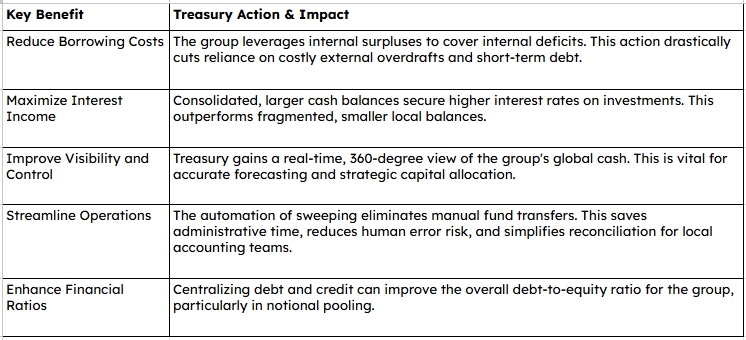
Why Dynamic Pooling is a Strategic Mandate
In today’s volatile economy, idle cash represents a costly inefficiency. Dynamic cash pooling transcends a mere helpful feature; it is a strategic mandate.
Navigating the Roadblocks
While the rewards are substantial, dynamic pooling presents complexities. Legal and tax issues often create the biggest hurdles, especially in cross-border setups:
Transfer Pricing & Tax: Physical sweeps create intercompany loans. The interest charged must adhere to an “arm’s length” rate—the rate two independent parties would agree upon. Tax authorities worldwide, guided by OECD-BEPS rules, closely scrutinize these rates. You must prepare robust documentation.
Regulatory Hurdles: Some countries impose strict capital controls or restrictions on cross-border fund movements. These can complicate or prohibit physical pooling. Notional pooling also faces restrictions in certain jurisdictions, including the US.
Technology Integration: The efficiency of dynamic sweeping hinges on the connection between your Treasury Management System (TMS), your ERP system, and your banks. Relying on spreadsheets to track intercompany balances simply won’t scale.
Dynamic cash pooling and sweeping transforms treasury. It shifts the function from a reactive cost center to a strategic value driver. The corporate group moves from having a collection of siloed bank accounts to operating as one unified, powerful, and highly liquid financial entity.